

We all want the best quality education for our children and communities.
Year after year, we’re told that “this ballot measure is going to fix our K-12 funding problems for good”. But, as school funding increases, test scores go down, students have more problems, and standards are lowered or removed entirely.
The tired approach of throwing more and more money at “the problem” does not solve it because there is no accountability in how the dollars are spent.
And now, they’re back with Proposition NN asking for more tax revenue “for education”.
But, will the increased tax revenue they want to keep from you REALLY go to education?
The Facts on Proposition NN

Fact: Prop NN would allow Colorado to keep your TABOR Refunds - Permanently.
If passed, Proposition NN will permanently allow the State of Colorado to keep some or all of the revenue that otherwise would be refunded to taxpayers under TABOR (Taxpayer’s Bill of Rights).
Source: Legislative Council Staff (LCS) Blue Book first draft
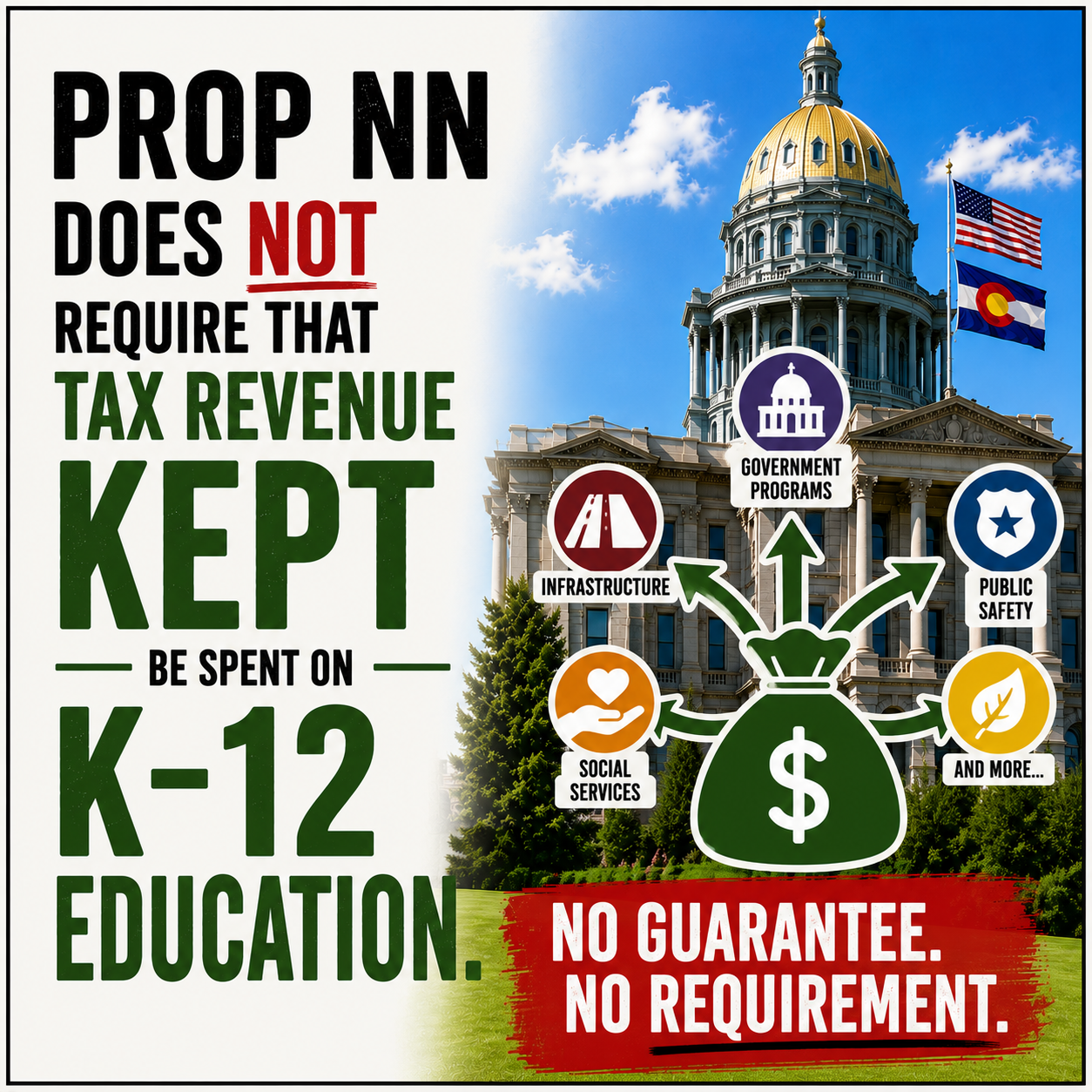
Fact: Prop NN does not require that tax revenue kept be spent on K-12 education.
Just like past education funding measures, if Prop NN passes, the revenue retained under Proposition NN may be spent on K-12 education, programs that support children, and after 10 years, on other state programs.
Source: Legislative Council Staff (LCS) Blue Book first draft

Fact: Prop NN will let the Colorado Legislature retain and spend more tax revenue as they increase K–12 education funding - Indefinitely.
If passed, Proposition NN lets the Colorado Legislature retain and spend amounts above the TABOR limit based on the highest past K‑12 spending, allowing education expenditures to grow progressively above the TABOR cap.
Source: Legislative Council Staff (LCS) Blue Book first draft
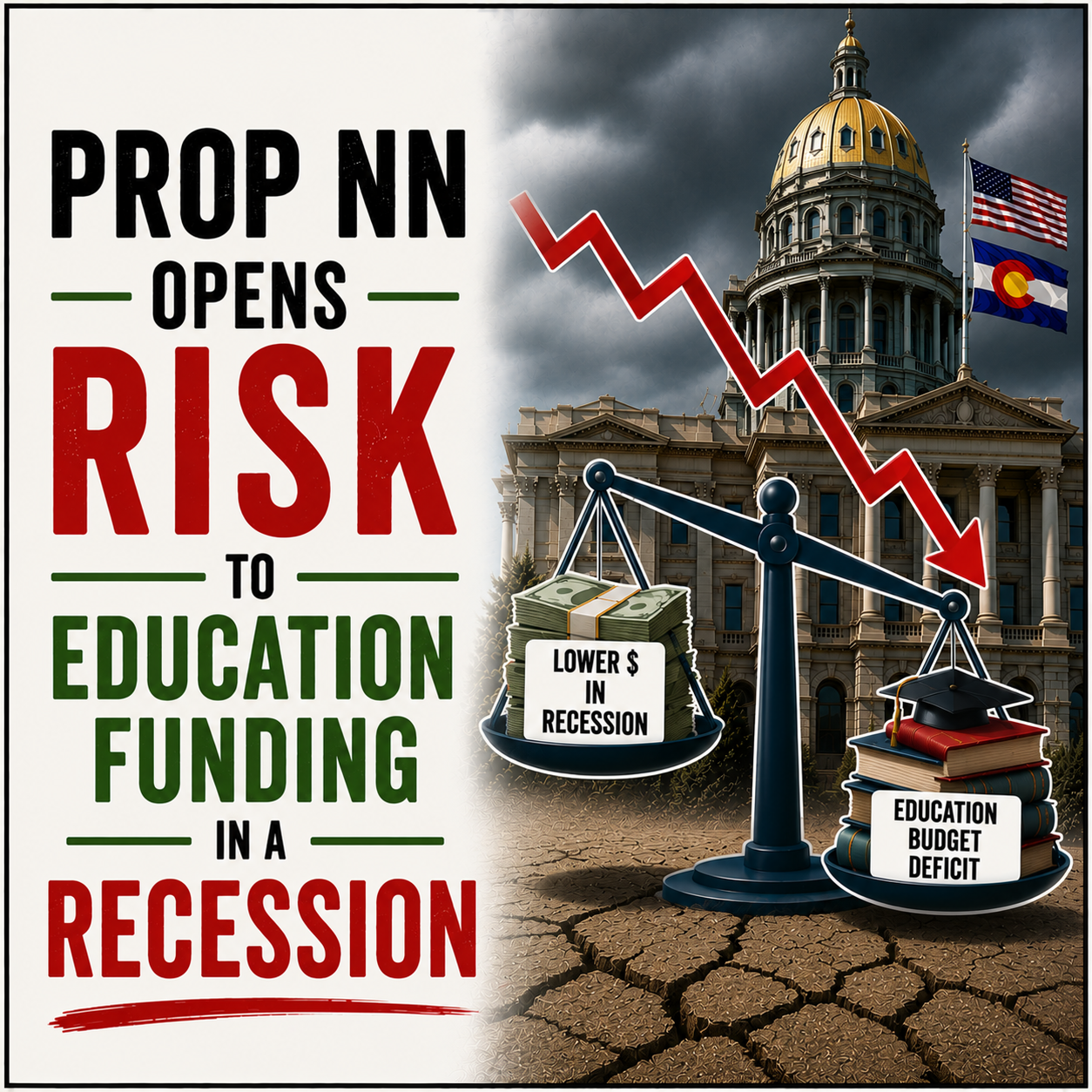

Fact: Under Prop NN, future recessions could lead to underfunding of K–12 education.
If passed, Proposition NN could cause a structural budget shortfall for education as the state’s tax revenue would fall below the TABOR limit. How will Colorado make up for these shortfalls in the era of ever increasing spending by the Colorado Legislature?
Source: Legislative Council Staff (LCS) Blue Book first draft
Fact: Prop NN will eliminate ALL TABOR refunds from 2026-2028, and that’s just the start.
If passed, Proposition NN is expected to eliminate ALL TABOR refunds for budget years 2026-27 and 2027-28. Expect that refunds beyond 2028 to be eliminated as well.
Source: Legislative Council Staff (LCS) Blue Book first draft
Education Funding in Colorado
Three decades of taxpayer funded increases. Where are the results? The Colorado’s legislature keep chasing for more and more of your hard‑earned money, promising that “this time” they will finally fix education. Despite record levels of education funding, results are not improving and enrollment is falling.

Admin Staff Growth Far Outpaces Investment in the Classroom (2014–2024)
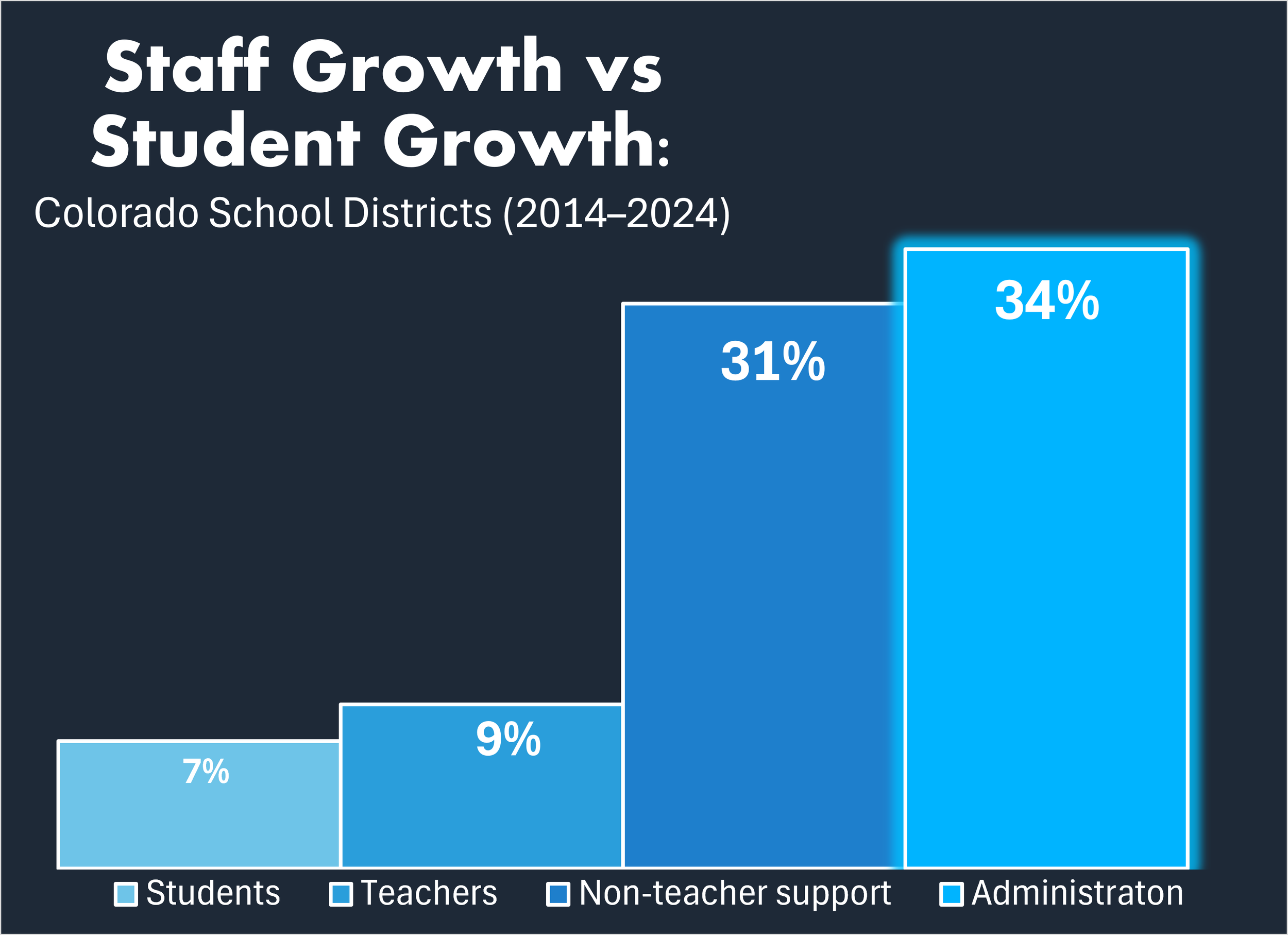
From 2014–2024, Much of the new funding has gone to bureaucracy rather than classrooms.
Administrators grew 34% and non-teacher support staff grew 31%, while students grew only 7% and teachers 9%. Rather than investing in our kids (like they promised they would), Colorado is growing a bloated, ineffective education bureaucracy.
Source: Common Sense Institute, “Dollars and Data 2025” report - Analysis of education staffing growth vs teacher and student outcomes. https://www.commonsenseinstituteus.org/colorado/research/education/dollars-and-data-2025
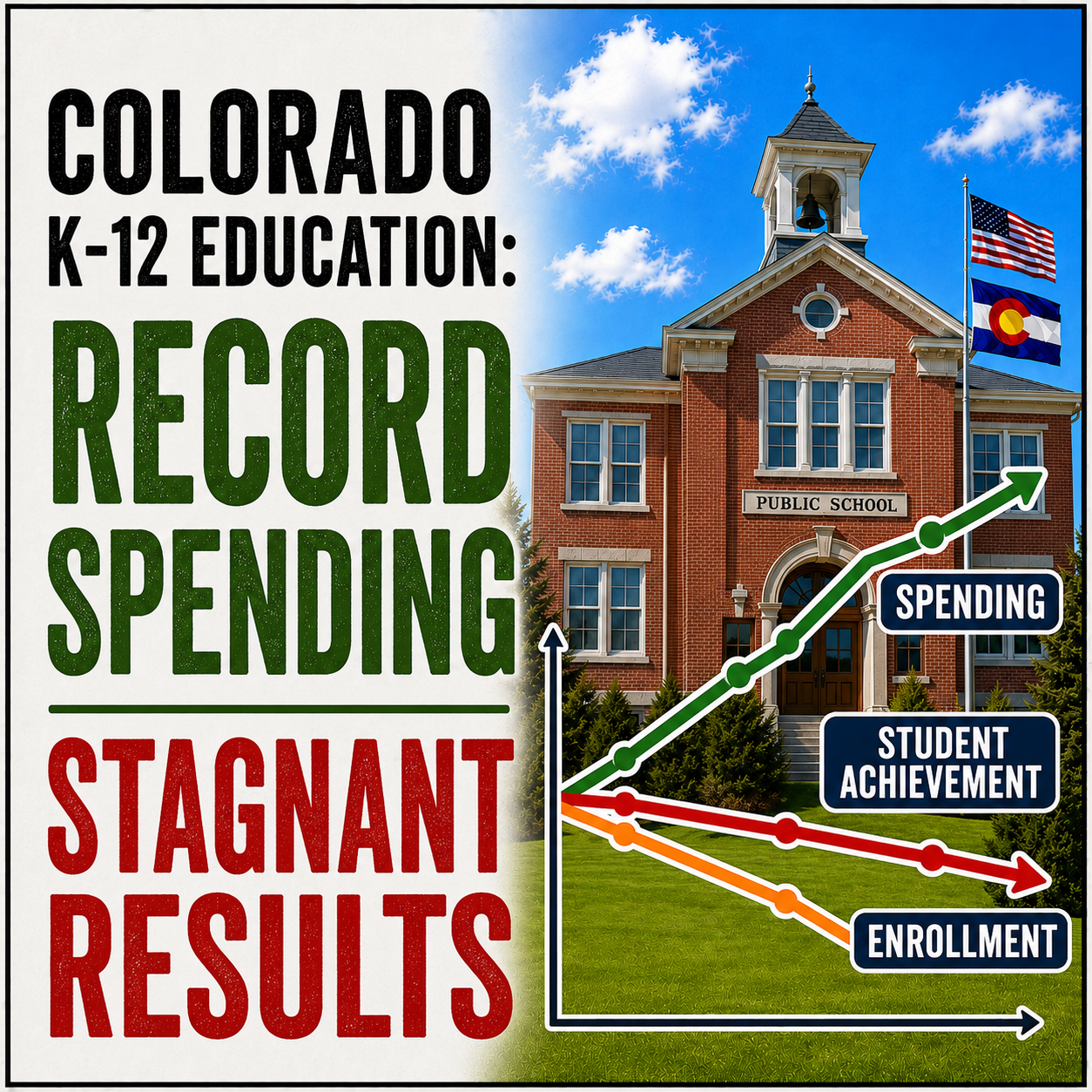
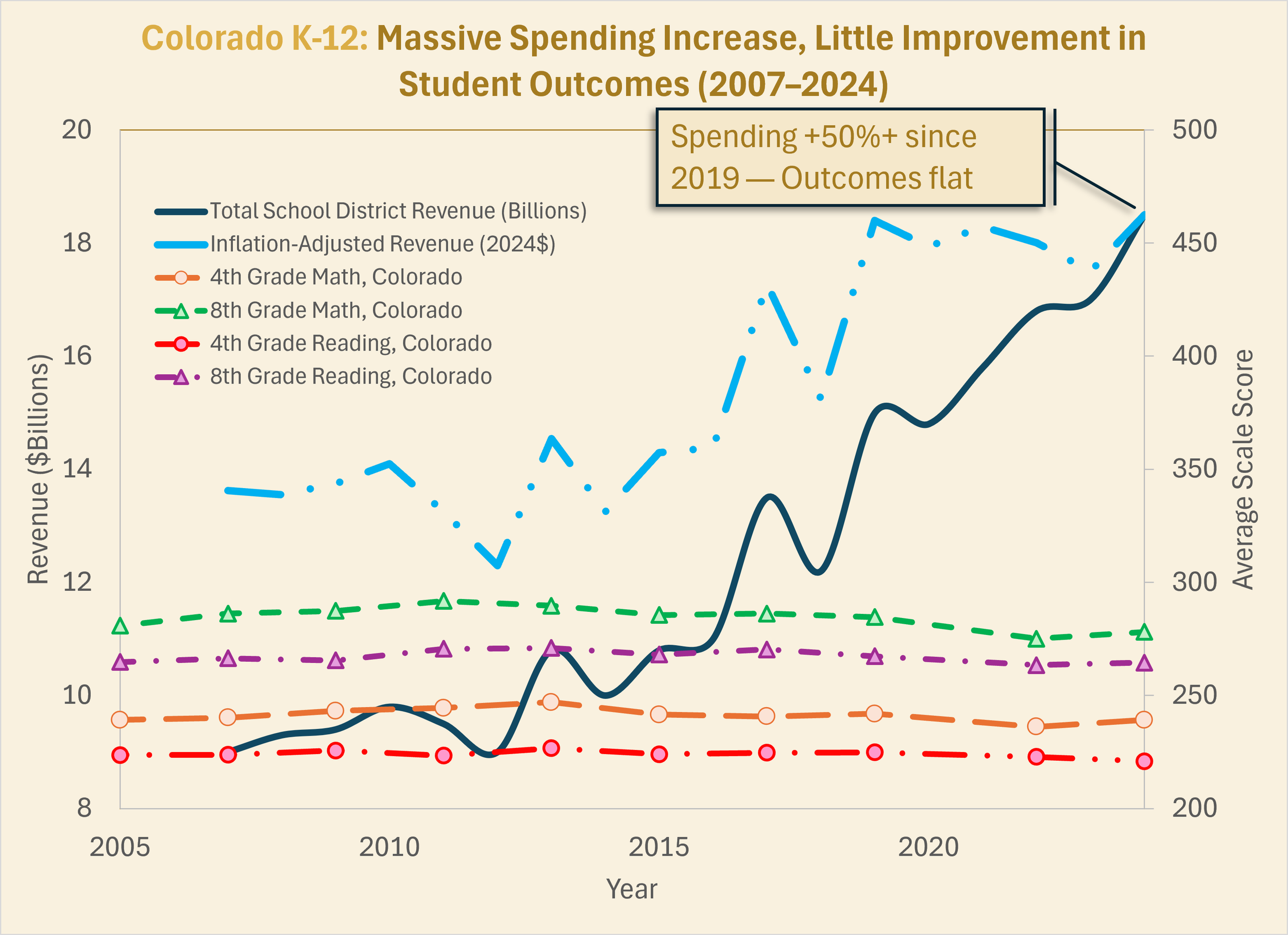
Education Spending hits $18.1 Billion ($20,000/student), but results don’t follow.
Spending has risen sharply (both nominally and adjusted for inflation), while student proficiency rates are flat, and enrollment is declining. In fact, as education spending has increased 30% since 2019, student test scores are flat.
The bottom line is that the increased spending via past funding increases has not improved Colorado K-12 performance or achievement.
Source: Broomfield Taxpayer Matters Whitepaper - More Education Funding, Less Taxpayer Affordability: A Critical Taxpayer Analysis of Proposition NN and Ballot Initiative #195
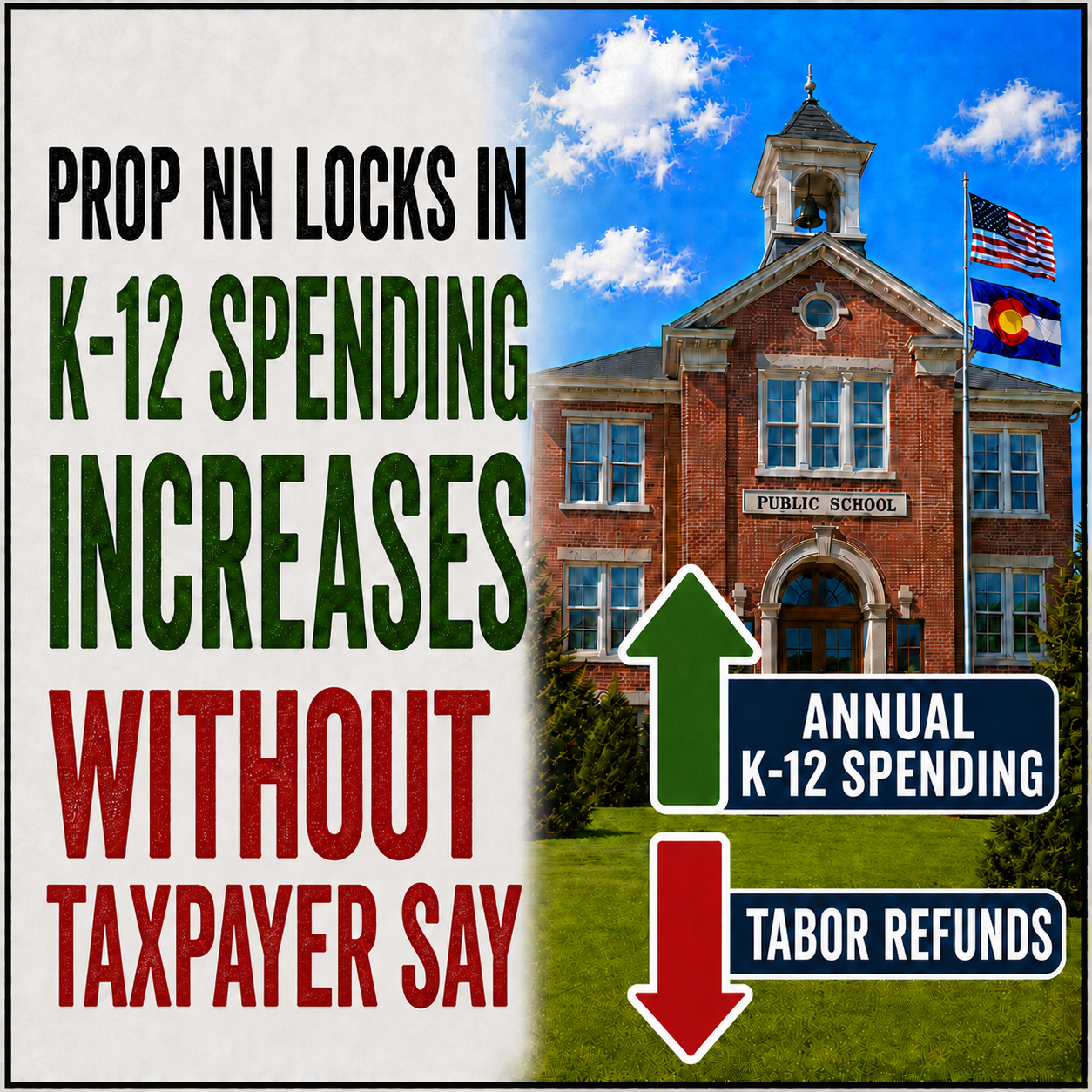
Prop NN locks in K-12 spending increase and removes taxpayer say in funding the future increases.
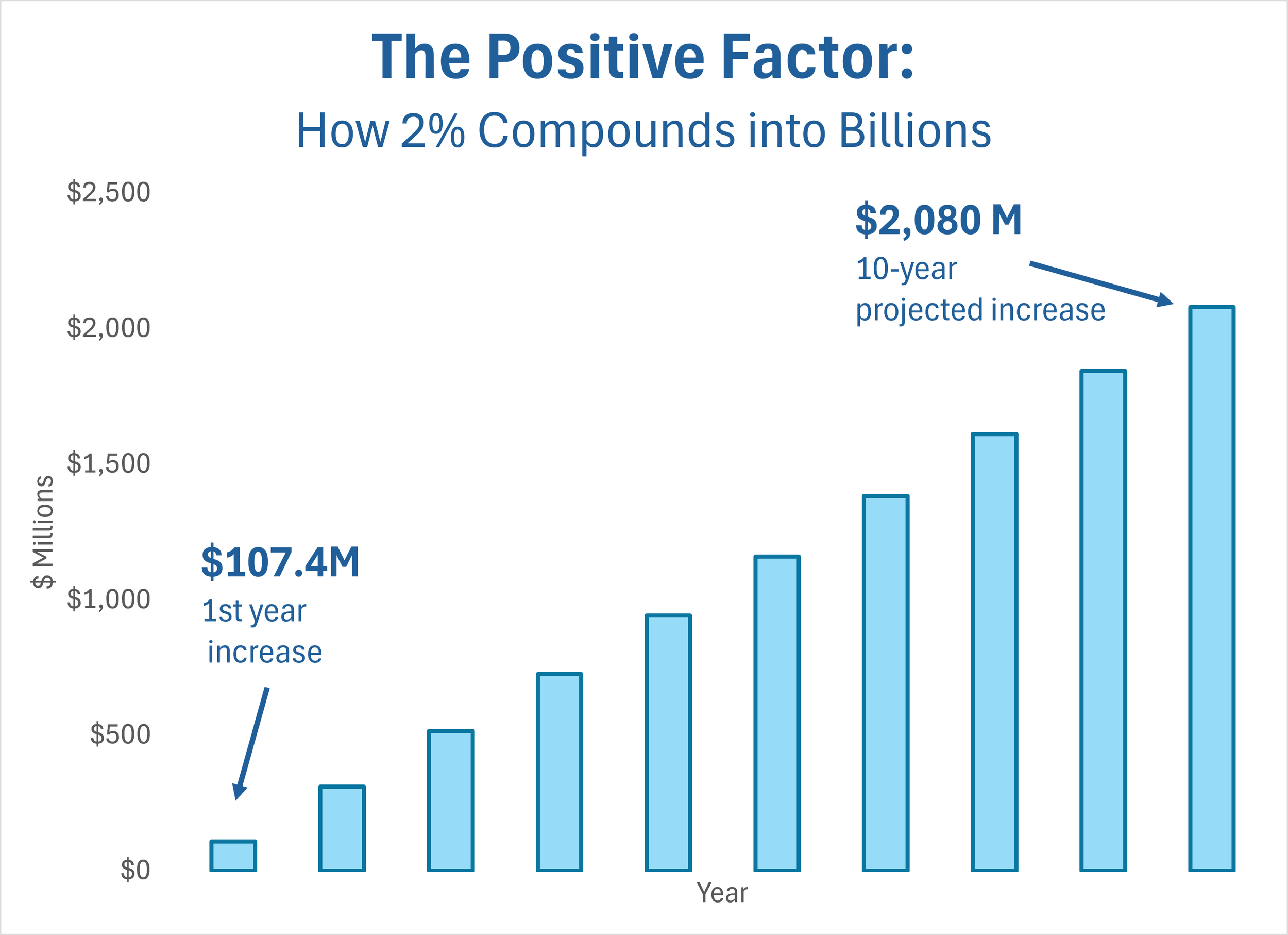
Prop NN would allow the State Legislature to not only keep more TABOR surpluses for education, it enables Colorado to implement a 2% annual increase for ten years. This so-called “Positive Factor” starts at $107 million and is projected to add roughly $2.08 billion over ten years by permanently raising the spending baseline every year. This locks in higher spending without voter approval on the increased funding.
Source: Colorado General Assembly, SB26-135 (2026), https://leg.colorado.gov/bills/SB26-135
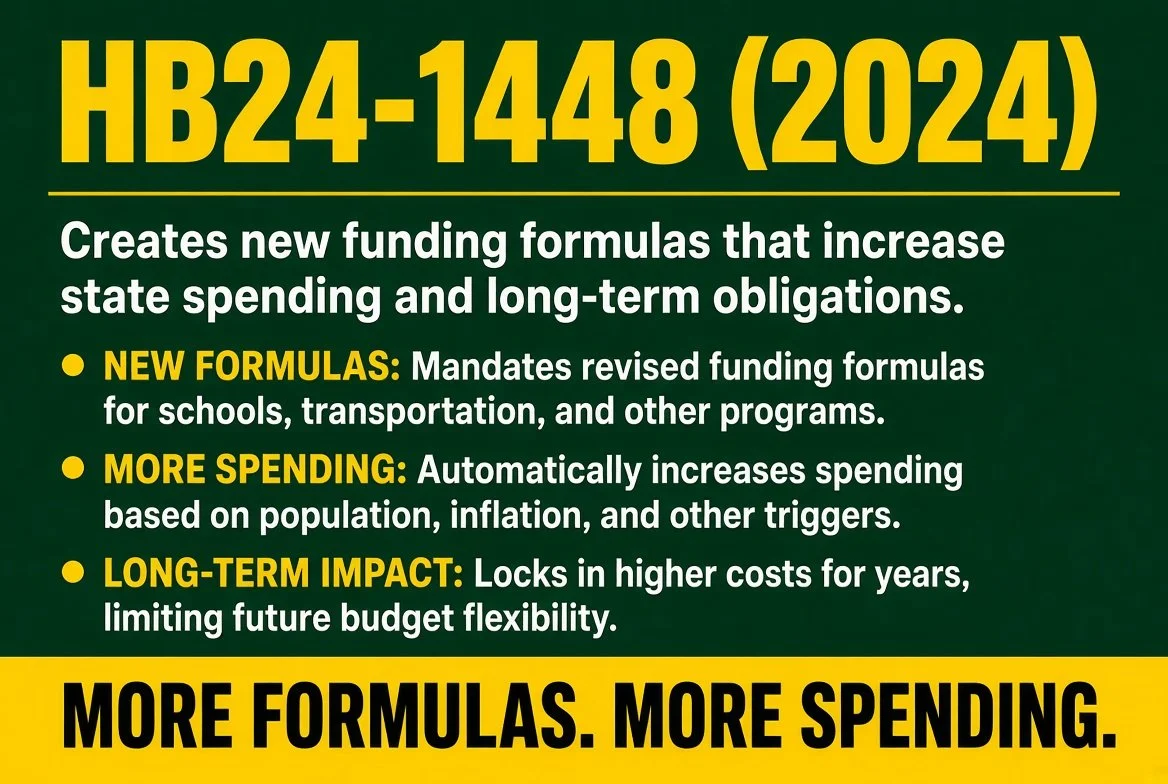
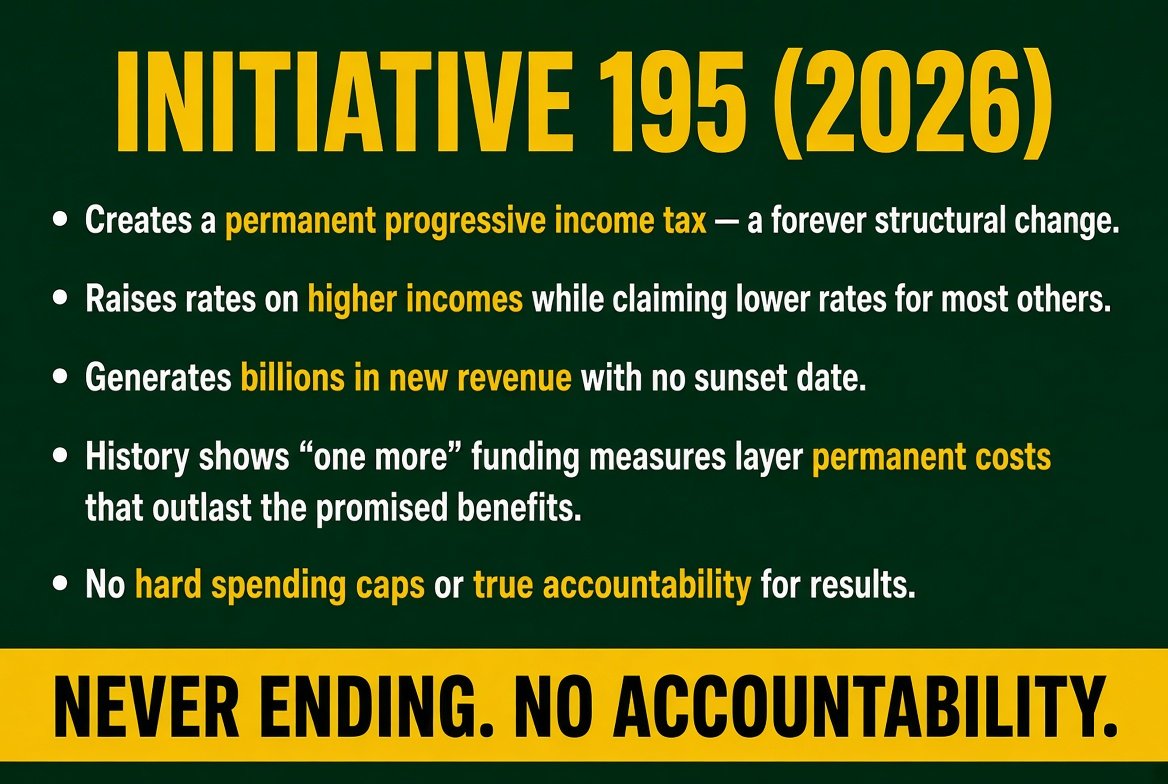
Education Funding History
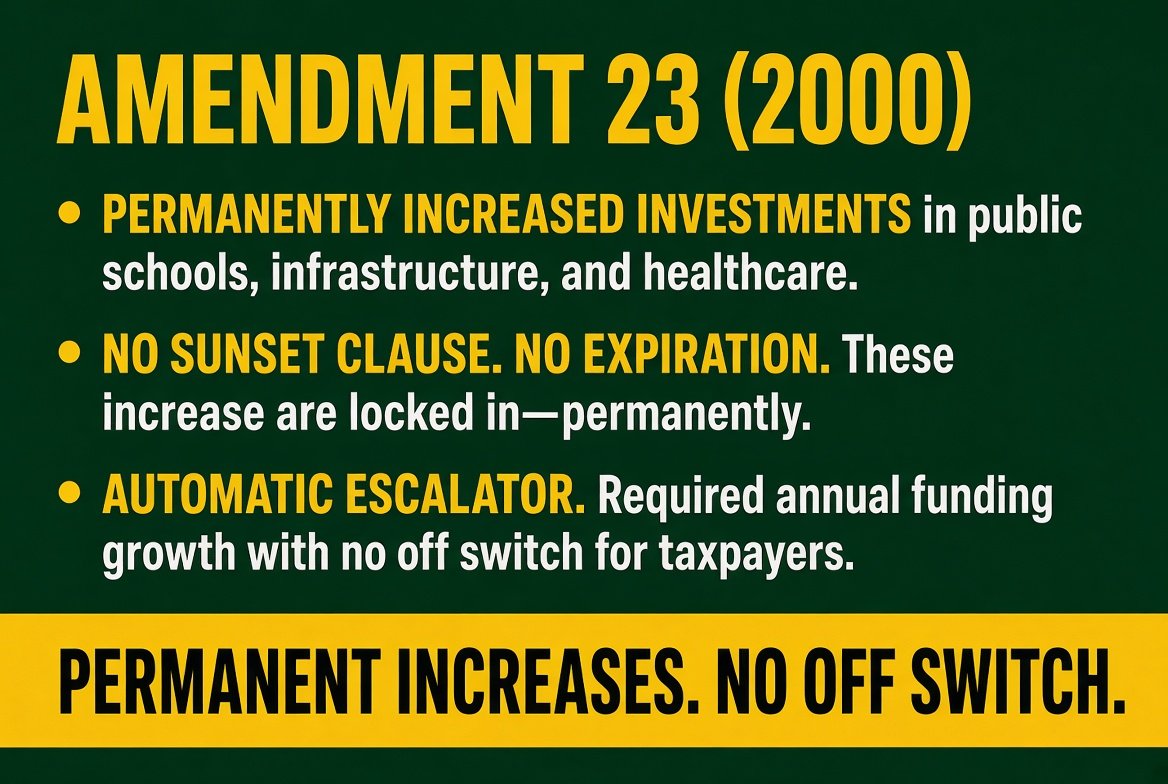
Source: Colorado Legislative Council School Finance reports; Ballotpedia – Colorado Amendment 23; Colorado Constitution Article IX, Section 17.

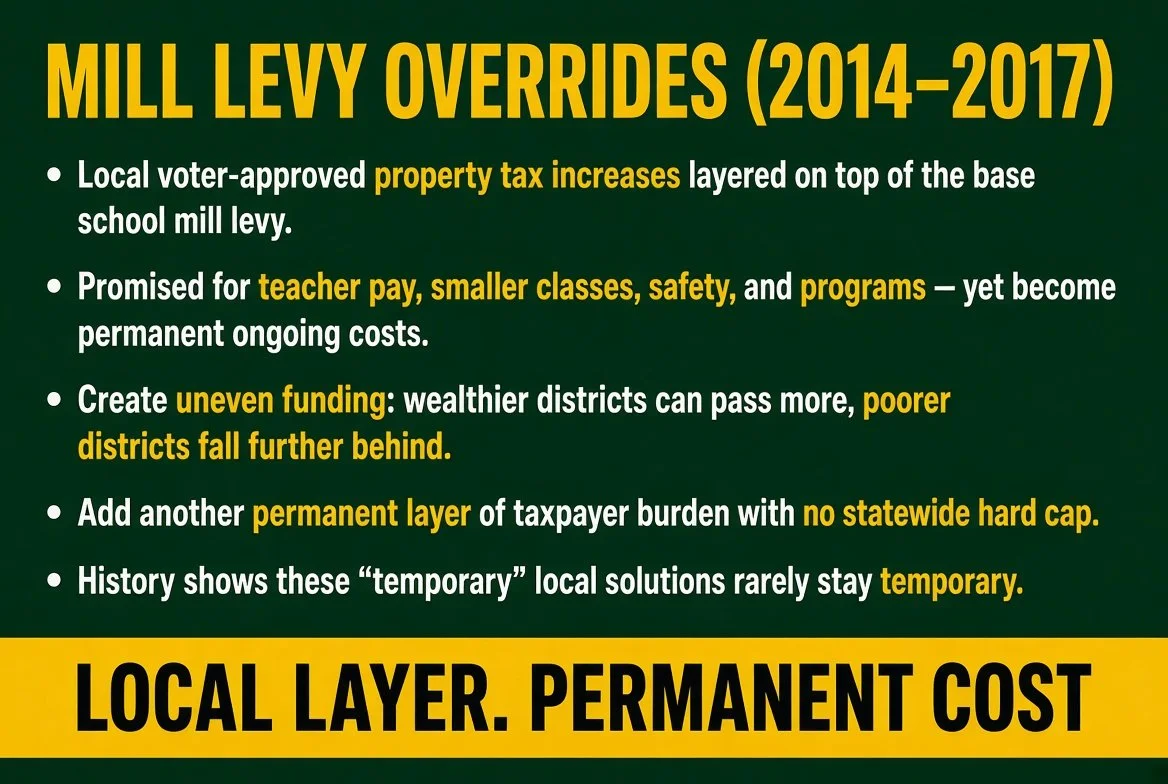
Source: Colorado Department of Education Mill Levy Override Revenue Reports (FY 2014-15 onward, pursuant to HB 14-1292); Ballotpedia – Adams 12 Five Star School District Ballot Issue 5C (November 2018); Adams 12 Five Star Schools official Ballot Issue 5B materials (2025).
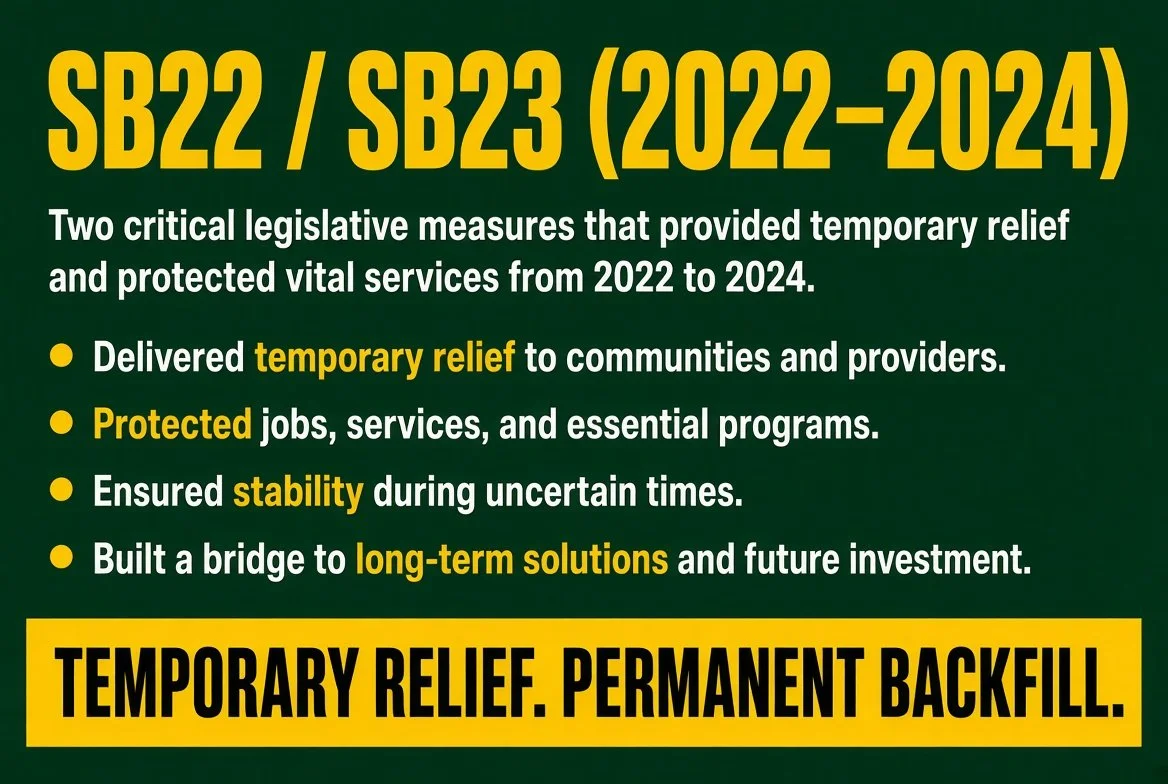

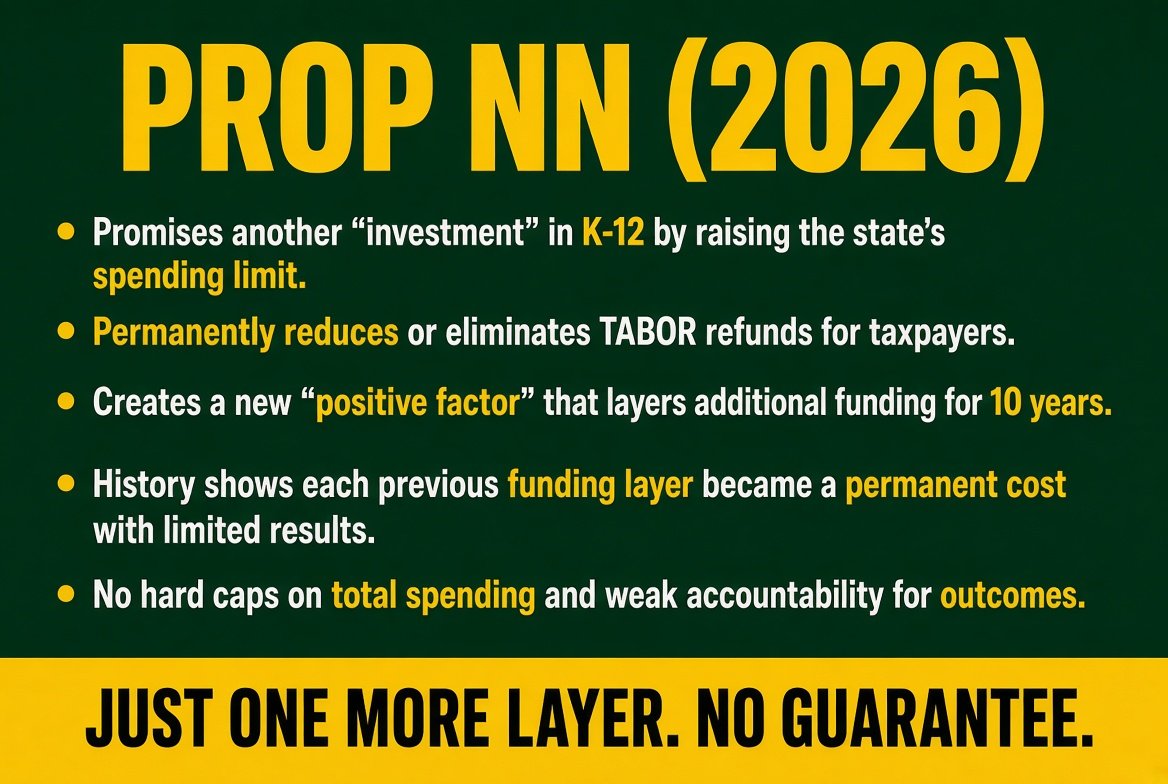
Source: Colorado General Assembly bill text for SB26-135 (as of 2026 session).

Source: Colorado Legislative Council analysis of Referendum A;Ballotpedia – Colorado Property Tax Exemption for Seniors, Referendum A (2000).

Source: Official 2012 Blue Book; Colorado Department of Revenue marijuana tax reports; Ballotpedia – Colorado Amendment 64.
News/Media
Learn about the history of Colorado’s Eduction Bills

A Shake to Go with Those Fries - Credit Independence Institute.

Keep the Change - Credit Independence Institute

Your ATM has Other Ideas - Credit Independence Institute